
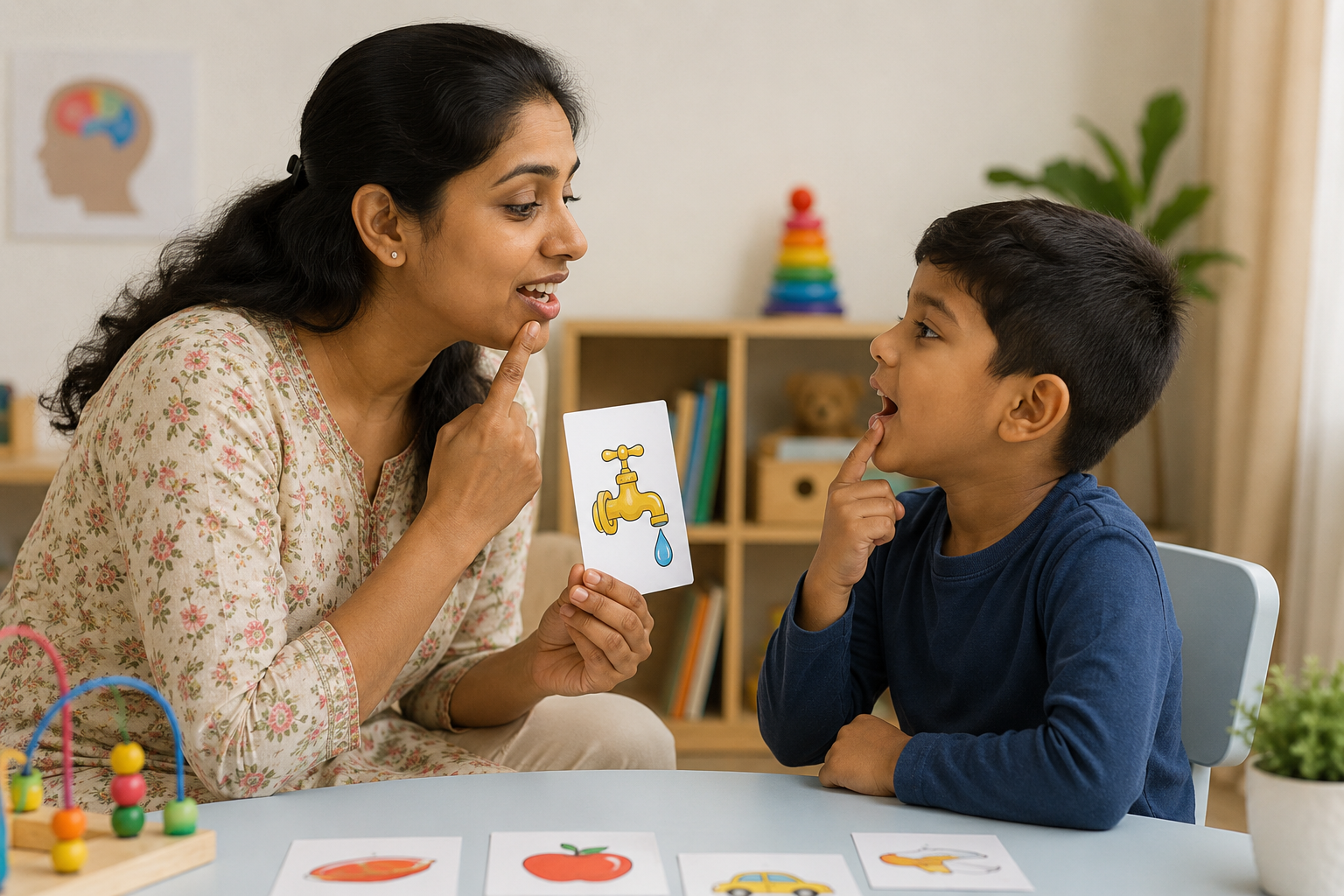
Parents of children with a speech and language delay may notice that the child communicates mostly through gestures, pointing, crying, showing physical signs of frustration, pushing the parent to show them an object that they need, or completely giving up on trying to attempt to communicate. The reasons for this could be many. A few reasons for these may be-
- Reduced exposure to a communication partner at home.
- Excessive screen time
- Speech apraxia
We will look more into ‘speech apraxia’ in this article. Speech apraxia, also called ‘Childhood Apraxia of Speech’ is a condition in children- typically characterised by inadequate use of words, even though the child is familiar with the word meanings and understands them correctly. The child may mispronounce common words. For example, saying ‘tap’ instead of ‘map’. The parents will usually notice that these errors do not follow a consistent pattern. The child may pronounce the word correctly at times but may be unable to pronounce them correctly at some other time, especially when using the word in the sentence or when emotional or excited. The main highlight of an apraxia of speech is that the child may be able to pronounce words correctly when they are not really paying attention to the way it is pronounced- ie when the child is narrating the days of the week or reciting alphabets or numbers or when singing. However, in a picture- naming activity which requires more of a conscious effort and planning to pronounce words correctly, the child may have difficulty saying the words. Apraxia of speech mostly occurs because the neurological pathways involved in involuntary speech has developed normally while the neurological pathways for planned speech and naming has not developed in a normal way.
Children with apraxia of speech usually do not exhibit weaknesses in their oral muscles. The strength of the oral muscles (lips, tongue, jaw) can be assessed through observing the ability of the child to drink using a straw, blowing, chewing food adequately and the ability to completely swallow food without leaving a residue in the mouth after swallow. In some cases of apraxia, child may also present with increased sensitivity inside the mouth making it difficult to tolerate and chew food of all consistencies and textures.
The child, in this case, may pocket food in the cheeks without immediately swallowing.
Speech apraxia is assessed and treated by a speech language pathologist who would first do a parental interview to understand more about the child’s strengths and nature of difficulty. After the initial interview, the child would be assessed through various activities or games to determine the nature and severity of the issue. In some cases, the speech language pathologist may also refer the child to an occupational therapist to rule out any other difficulties. Consistent speech and language therapy along with guided home training by parents would be recommended by the speech therapist.
Speech therapy would typically start by helping the child pronounce target speech sounds. Then gradually, pronounciation of target words and small phrases would be improved through therapy. After this level is achieved the therapist will assist the child in pronouncing sentences with clarity.
In the final stages of therapy, the child will be encouraged to apply the taught speech skills in regular conversation and for narration of incidents.
After complete discharge from therapy services, it is recommended that the child is brought to the therapist every 4 to 5 months for a brief consultation so that the progress in communication skills can be monitored and quantified.
Marlyn Mathew
Speech Language Pathologist
Related services and reading
- Speech therapy in Kochi
- Developmental assessment
- Speech Therapy in Kochi: A Complete Guide
- Executive Function Difficulties in Children
Further reading: NIDCD: What is apraxia of speech?.
Need support? Contact Nutrimind or call +91 97450 05400 to book a consultation in Tripunithura, Kochi or online.
Frequently Asked Questions
- What is childhood apraxia of speech?
Childhood apraxia of speech is a speech disorder in which a child knows what they want to say but has difficulty planning and coordinating the movements needed to say words correctly. - What are the signs of speech apraxia in children?
Inconsistent errors on the same word, difficulty with words that need conscious effort such as naming pictures, and clearer speech during automatic tasks like singing or counting. - Is apraxia caused by weak mouth muscles?
Usually not. Children with apraxia typically have normal oral muscle strength; the difficulty is in planning speech movements. - How is childhood apraxia of speech treated?
A speech language pathologist assesses the child and provides regular speech therapy, moving from sounds to words, phrases and sentences, along with guided home practice by parents.